

You are here
Content
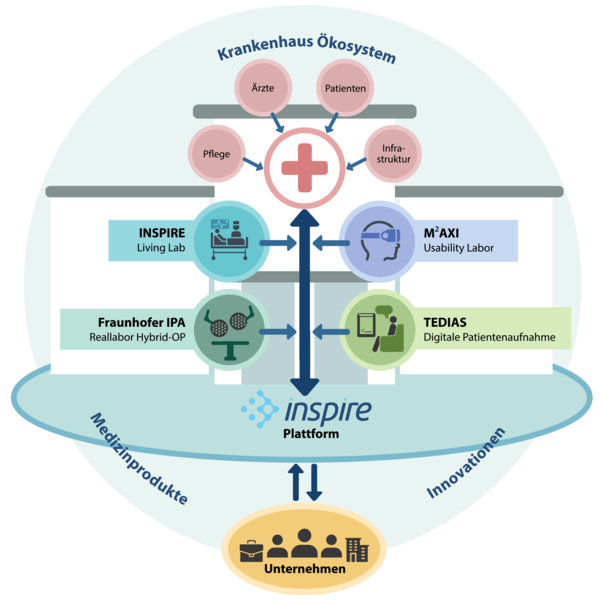
Living labs are a key driver of innovation in medical technology. They make it possible to test new technologies under real-world conditions and identify challenges at an early stage – before they move into routine operation. At the same time, they foster collaboration between different disciplines and exchange with end users. This gives rise to solutions that are safe, efficient and centered on patients.
The Mannheim living labs are based at different institutions, but are within walking distance of one another and connected under the umbrella of the INSPIRE platform. While the M²AXI Usability Lab belongs to the Mannheim Medical Faculty of Heidelberg University, the INSPIRE Living Lab is directly affiliated with the Mannheim University Hospital. The hybrid operating room and TEDIAS are also located on the campus of the University Medical Center Mannheim, but are run by Fraunhofer IPA. The AI4U living lab is based at the Central Institute of Mental Health.
The living labs are complemented by further services of the INSPIRE core partners. At the Mannheim University of Applied Sciences (THM), research into solutions for the challenges of the future takes place through numerous research projects – including interdisciplinary ones - related to the healthcare industry. Applications used include molecular cell biology and analytics, integrated sensor technology and intelligent measurement systems, machine and deep learning methods, and specific AI applications. Various multimodal technology platforms at THM offer companies a wide range of opportunities for collaboration and service offerings.
Because of their different sponsorships and affiliations, the individual INSPIRE test environments have different areas of focus – but this is precisely what allows them to address product developments at different maturity levels and in different settings, as well as diverse research questions. Mutual support in working with startups, SMEs and companies across the individual living labs is therefore possible without competition. Synergies can be leveraged, and long-term support for startups can be provided from one living lab to the next.
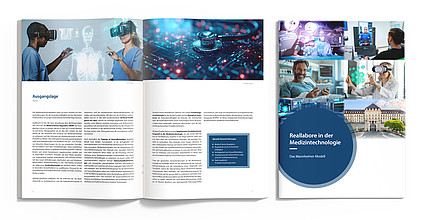
Find more information on the Mannheim Living Labs in our white paper:
Living Labs in Medical Technology: The Mannheim Model
DOI: 10.11588/heidok.00035899
PDF: DOWNLOAD
AI4U at the Central Institute of Mental Health (ZI)

Young people are particularly affected by mental health problems, yet they make only limited use of health promotion services. Rapid advances in artificial intelligence (AI) and digitalization are enabling the development of new digital interventions. The living lab “Artificial Intelligence for Digital Personalized Mental Health Promotion” investigates the digital transformation of healthcare through the novel application of AI methods to a digital mHealth training program for mental health promotion in adolescents and young adults, tailored to the individual and context in their real-life environment. The living lab includes transdisciplinary projects with the direct involvement of key practice stakeholders in the fields of educational counseling, school psychological counseling, school social work, media education and care for young people with refugee experience, together with an interdisciplinary research group with expertise in artificial intelligence, public mental health, digital interventions, sociology and participatory research.
AI4U – The AI Living Lab for Mental Health
- Development and evaluation of an AI-based mHealth app
- Transdisciplinary projects with the direct involvement of key practice stakeholders
- Interdisciplinary research group with expertise in artificial intelligence, public mental health, digital interventions, sociology and participatory research
For further information, please visit the website: https://ai4u-training.de/.
Digital Patient Admission at Fraunhofer IPA
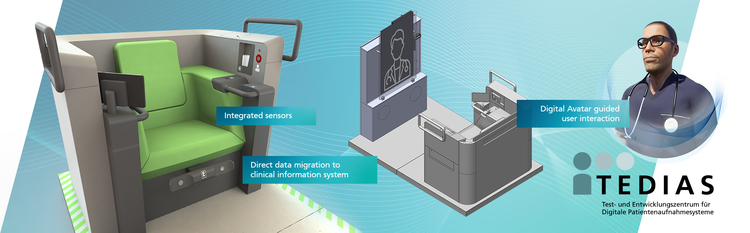
At the Test and Development Center for Digital Patient Admission Systems (TEDIAS), an interdisciplinary consortium led by Fraunhofer IPA develops and tests systems to make data collection and documentation during patient intake more efficient. Partial automation combined with consistently structured data collection ensures the quality and comparability of data for use throughout the entire downstream process, while minimizing the time required for documentation.
The system consists of a base unit in the form of an ergonomic chair with integrated vital sign sensors. These are controlled and read out by a central system. In addition, the patient is guided by an avatar and chatbot, which is also used to go through digital questionnaires. The system is designed to be modular, allowing questionnaires, digital content, measurement technology, the avatar, as well as the dashboard and process workflows to be modified and studied in a clinical setting. Data from TEDIAS is also transmitted to clinical information systems, and document templates are generated, making it possible to observe and evaluate the added value of a digitalization measure within the overall real-world clinical process.
The test and development center is located on the campus of the University Medical Center Mannheim and is accessible to R&D partners as part of development projects.
TEDIAS – The Living Lab for Digital Patient History Taking
- Development and testing of solutions for digital patient admission processes
- Living lab operating within both development and clinical settings
- Automated and digitalized processes
- Patient guidance through an avatar with chatbot
- Structured data storage and integration into the clinical information system
- Integration of solutions into an existing framework of questionnaires, dashboard, and measurement technology
For further information, please visit the website: https://gesundheitstechnologien.ipa.fraunhofer.de/de/unsere_projekte/tedias.html and www.tedias.de
Hybrid Operating Room at Fraunhofer IPA
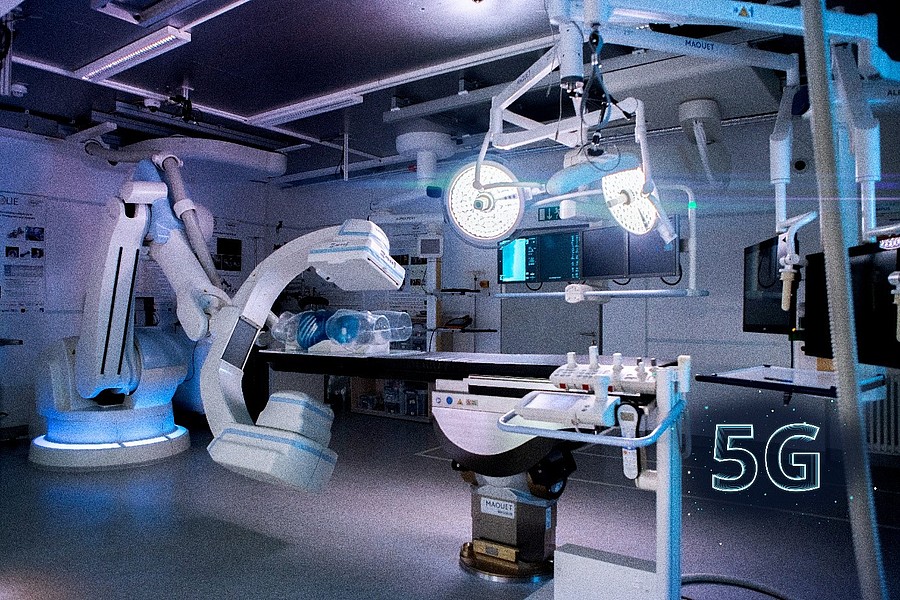
Fraunhofer IPA operates a fully equipped experimental hybrid operating room as a technology development platform on the campus of the University Medical Center Mannheim (UMM). The setup mirrors the one used in actual patient care at UMM, enabling an optimal replication of real-world OR processes, including the involvement of appropriate specialist staff. The hybrid OR is equipped, among other things, with an X-ray-compatible operating table, surgical lighting and a Siemens Artis Zeego, has access to PACS and a modern 5G infrastructure, and enables research and development work on a wide range of technical and biological phantoms. As part of projects within Fraunhofer IPA's “Health Technologies and Processes” research area, the hybrid OR is made accessible to companies. In addition, in-house developments in automation and assistance systems take place there, feeding synergistically into R&D initiatives.
Hybrid OR – The Living Lab for Testing Medical Technology Developments and Processes
- Development, testing and training of surgical equipment, procedures and assistance systems
- Access to infrastructure and application experts
- Medical devices, tracking and 5G network infrastructure
- Video recording, streaming and conference rooms
For further information, please visit the website: https://gesundheitstechnologien.ipa.fraunhofer.de/de/unsere_leistungen/reallabor_hybrid-op.html
INSPIRE Living Lab at the Mannheim University Hospital
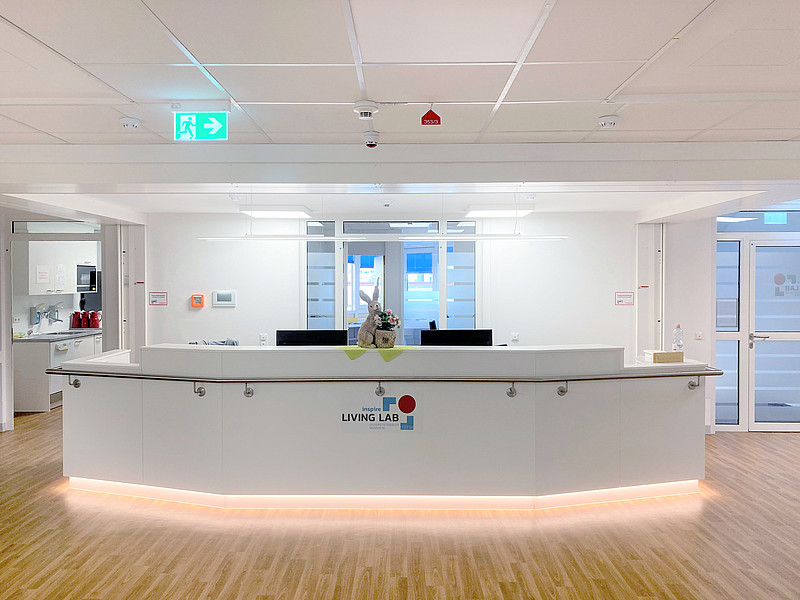
MedTech startups and companies develop innovative products that can significantly ease the lives of patients and the daily work of nursing staff and physicians. However, making a digital health device, medical product or app ready for use in real-world care requires an intensive development period. The earlier feedback and assessments from the intended user groups are taken into account, the more precisely product development can proceed. Since the MDR came into force, medical technology companies also increasingly need real-world data to demonstrate the clinical benefit and safety of their products. To this end, the INSPIRE Living Lab builds a bridge between industry and clinical practice. Located at the heart of the Mannheim University Hospital, this living lab gives companies, SMEs and startups the opportunity to test products – before they reach market maturity – with real patients, physicians and nursing staff in an actual ward setting. The IT, data protection and compliance departments can also be consulted. The ward regularly cares for patients from the orthopedics and urology departments, and 20 beds are currently in active use. To enable thorough product testing, modern technical infrastructure has been set up in the medical and nursing areas as well as in the patient rooms, allowing for the efficient and safe development of health applications. Through close involvement of users, direct feedback from subject-matter experts, and targeted data collection in the clinical setting, the product development process can be optimized.
INSPIRE Living Lab – The Integrated Living Lab in Inpatient Care
- Living lab within everyday clinical ward operations
- Integration into actual workflows
- Expert feedback
- Modern IT infrastructure with diverse connectivity options
- Involvement of patients
For further information, please visit the website: www.livinglab-umm.de
M²AXI Lab at the Mannheim Medical Faculty
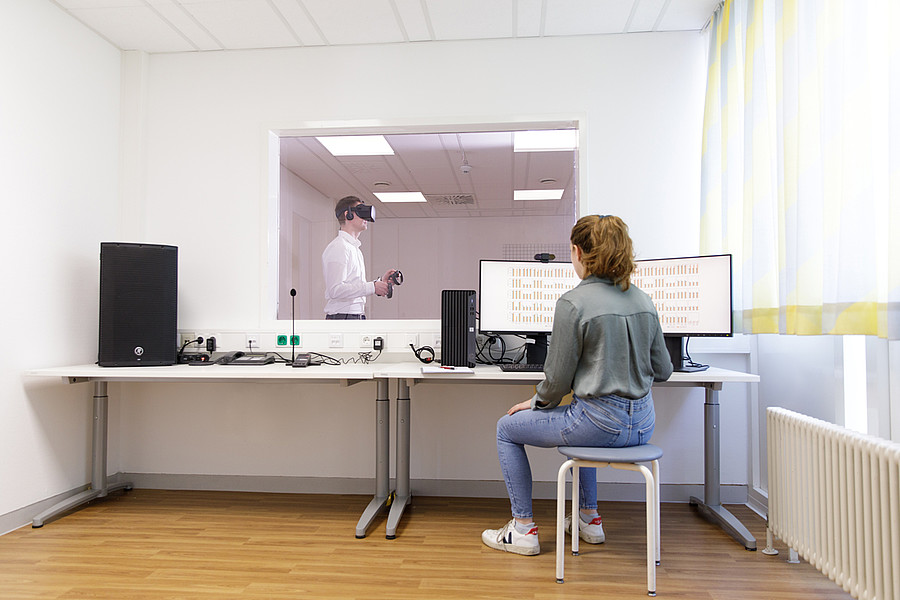
The Mannheim Medical User Experience and Usability Innovations Lab (M²AXI Lab) serves as a controlled environment for the evaluation and testing of digital products in the field of medicine, such as medical devices, software and mobile applications. The M²AXI Usability Lab is located at the heart of Mannheim University Hospital, which makes it easier to work directly with stakeholders relevant to medical products, such as medical staff and patients. The facility is open to start-ups, medium-sized and larger companies, as well as scientific research groups. The usability lab can be used at various stages of medical product and software development and testing – both to review user-friendliness and, for example, to test the effects of design changes. The tests give developers direct feedback on the usability of the respective product at an early stage, before it goes into series production. In this way, the lab and its scientific expertise can help improve the usability of new medical technology products before they reach the market.
M²AXI Usability Lab – The Living Lab for User Experience & Usability
- Specifying user requirements
- Expert feedback on medical technology products
- Participant recruitment for studies
- Formative/summative evaluations for medical technology products
- Design of user interfaces for digital applications
- Consulting on usability documentation [IEC 62366]
- Access to lab space and equipment
- Workshops on “Design Thinking”
For further information, please visit the website: www.umm.uni-heidelberg.de/cpd/digitale-gesundheit/biomedizinische-informatik/m2axi-usability-labor/
Mannheim University of Applied Sciences
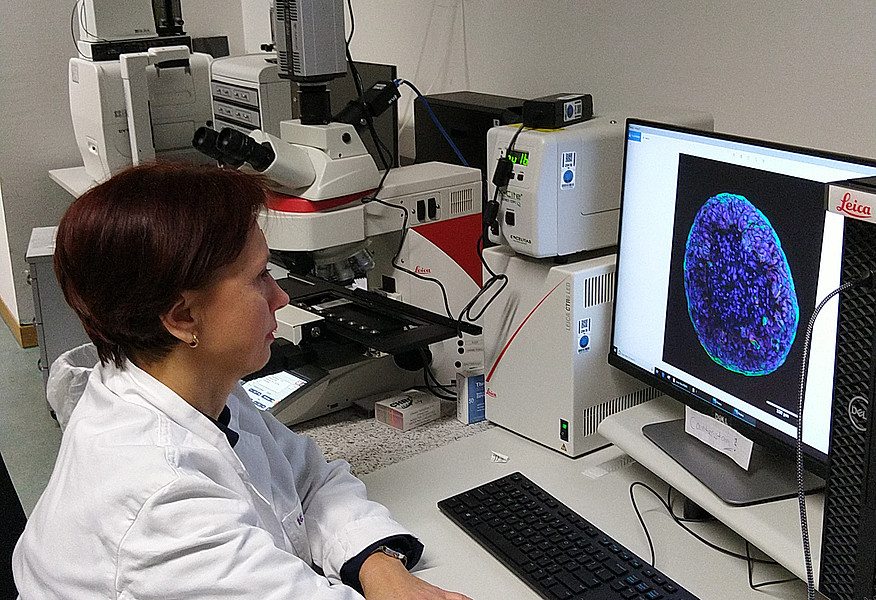
As a core partner of INSPIRE, Mannheim University of Applied Sciences contributes its expertise from a range of research areas, primarily on topics related to its research mission statement “Healthy Living and Quality of Life.” Various technology platforms within its research and competence centers offer opportunities for collaboration.
Research on expanding the potential of innovative digital technologies for the healthcare industry (focus on medical technology) in a state-of-the-art IT infrastructure
- Artificial intelligence and computer vision in industry
- Medical image processing / artificial intelligence
- Digital twins in clinical and industrial settings
- Embedded systems and digital applications
- Optical measurement and sensor technology for industry
- Mass spectrometry imaging: molecular imaging for the healthcare industry
- Mass spectrometry cell assays for drug discovery
- Tissue clearing / 4D microscopy
- Organoids / 3D bioprinting for drug discovery
- AI in medicine and healthcare
- Digitalization in healthcare
For further information, please visit the website: www.hs-mannheim.de/die-hochschule/forschung-und-transfer.html
Human Data Interaction Lab at the Mannheim University of Applied Sciences
At the Mannheim University of Applied Sciences, the Human Data Interaction Lab (HDIL), in cooperation with partners, develops innovative approaches to visualizing medical data. Using human-centered design methods and data-driven analyses, these approaches support various areas of health informatics (including EHR visualizations to support a wide range of medical data analyses, specialized time-series visualizations for longitudinal data, geovisualizations to optimize mobile emergency care, and capacity and pathway management systems for demand-based resource use in hospitals).
For further information, please visit the website: www.hdilab.org